

The Most Effective Ways to Quit Smoking
2026-08-06Why Addiction Is More Common Than Most People Think
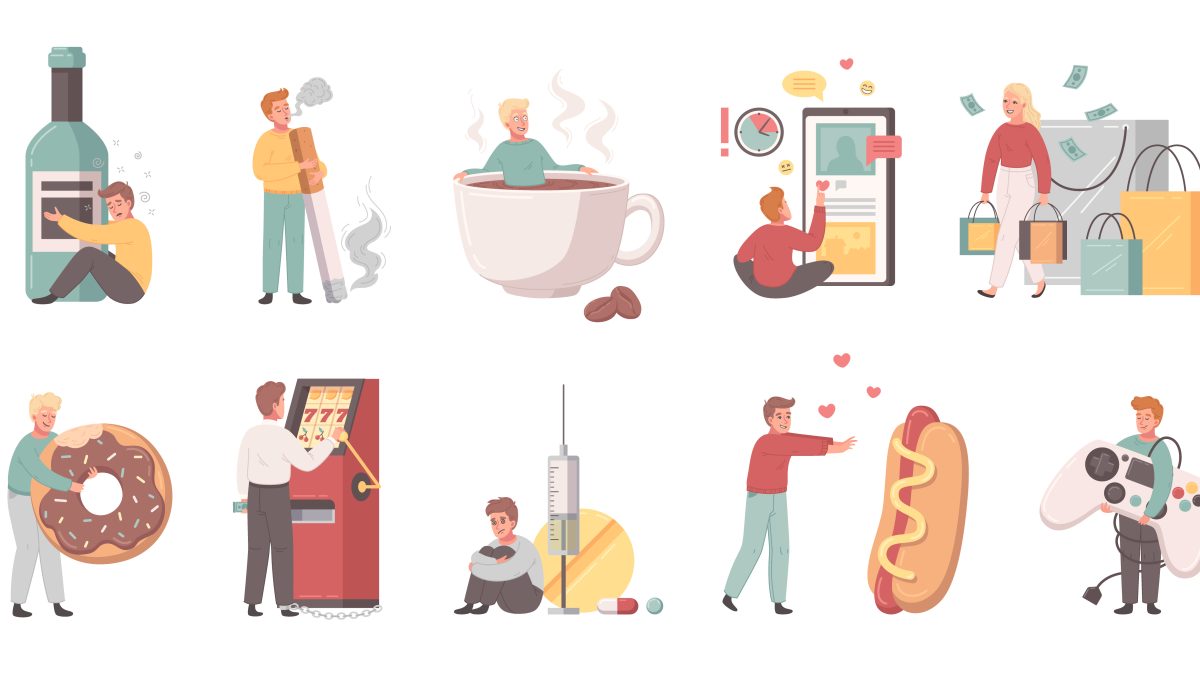
Bad habits cartoon icons set with unhealthy addiction symbols isolated vector illustration SSUCv3H4sIAAAAAAACA4WRTU/DMAyG/4rlc/kStx4RA4nTBMeJg5uY1loaV0naMU397zjbkLhx82u/ie3HJ+woi8P2hBLCnEuiIhqxfWiQvRRNQgHb+7XBXKjMmbN5TTkq3Fv1rH8/2Z1qHlt8UfVA0cNzkrhHezx31zSuzT+ui1o/G6SeozvWhtYxcWA6999ZaX8onMbrMIt41ktIs5ca4qKOgtUf67C2mI412yeaBnFJFk5Ve87OAnwiDwN1UjI4SkU1gjiNGTIXOEgZYI4DUyjDEch7cZUS5OPYacggWYPx8LCwM2TwF+UtbIwjdYFhs/04r/vO0bO5IrxtX+FL02g4GizfFQo2VzqXv/KdjeF4KjMFC8eRk7OT3ORBp0lib3bd27nWdf0BuQm6dcwBAAA=
Addiction can affect people of any age, background, or socioeconomic status. It is not limited to illegal drugs. Alcohol, nicotine, prescription medications, gambling, gaming, digital behaviours, and other everyday activities can become difficult to control when they begin to affect the brain’s reward system and become a primary way of coping with stress or emotions.
Because addiction often develops gradually, the early signs can be easy to overlook. Biological, psychological, social, and environmental factors can all influence how dependence develops and why stopping can become difficult. Understanding these factors helps challenge the idea that addiction is simply a matter of poor choices or weak willpower. This article explores how addiction develops, why it is more widespread than many people realize, and how greater awareness can reduce stigma and encourage earlier support.
Quick Summary
Addiction is not limited to illegal drugs or people who lack self-control. It can develop gradually as repeated substance use or behaviours become connected to coping, stress relief and rewards. Understanding how biological, psychological, social and environmental factors contribute to addiction can help reduce stigma and encourage earlier recognition and seeking appropriate support.
The Misconception Around Addiction
Addiction is often pictured as a rare crisis that only affects people who use illegal drugs or who somehow lack self-control. This view is incomplete and damaging. In truth, addiction reaches far more people across every background than most realize.
Stigma and misunderstanding keep many cases hidden or minimized, so the true scale stays out of sight. People assume “it could never happen to me or someone I know,” yet everyday habits can quietly escalate into dependence.
Raising awareness of how common addiction really is, and of the ordinary ways it develops, helps replace judgment with understanding and opens the door to earlier support and recovery.
How Addiction Can Develop Gradually
Addiction rarely arrives overnight. It usually builds through repeated behaviours that start as manageable or even helpful.
A drink after work to unwind, a cigarette during stress, scrolling on a phone to escape boredom, or relying on a prescription for pain or anxiety can feel normal at first. Over time, the brain and body adapt. Tolerance rises, so more is needed to get the same effect. What once felt optional becomes a preferred or necessary way to cope, relax, or feel “normal.”
The shift is often subtle: more frequent use, difficulty cutting back, continued use despite growing problems in health, relationships, or work. By the time the pattern is recognized as dependence, the habit has already taken root.
This gradual process explains why so many people develop addictions without ever intending to.
Common Substances and Behaviours Linked to Addiction
Addiction is not limited to illicit drugs. Some of the most widespread dependencies involve legal and socially accepted substances and behaviours.
Alcohol is the most common example: culturally normalized yet capable of producing strong physical and psychological dependence.
Nicotine, whether from cigarettes or vaping products, remains highly addictive for tens of millions.
Prescription medications—opioids for pain, benzodiazepines for anxiety or sleep, or stimulants—can lead to dependence even when started under medical care.
Everyday behaviours can follow the same path. Compulsive smartphone and social media use, online shopping, gambling, gaming, excessive work, or rigid patterns around food and exercise can become primary ways of regulating mood or escaping stress. These activities deliver quick rewards and are readily available, which makes the slide into loss of control easier and more common than many expect.
The Biological Factors Behind Addiction
Biology plays a central role. The brain’s reward system, particularly pathways involving dopamine, reinforces behaviours that feel pleasurable or relieving. Substances and certain behaviours trigger dopamine release, teaching the brain to prioritise them. With repeated exposure, the system adapts: natural rewards such as food, social connection, or everyday achievements lose relative power, while the addictive stimulus gains stronger pull. Neural circuits involved in motivation, stress response, and self-control change, making it harder to resist urges or sustain long-term goals.
Genetic factors contribute substantially. For many substances use disorders, heritability estimates hover around 50 percent. Individual differences in brain chemistry and stress reactivity further shape vulnerability. These neurological shifts help explain why stopping is rarely a simple matter of willpower once a pattern is established.
The Social and Environmental Influences on Addiction
Social and environmental conditions strongly influence whether and how addiction develops.
Cultural norms that treat heavy drinking, constant productivity, or nonstop digital connection as ordinary lower the threshold for problematic use. Peer groups, family modelling, and social settings where use is expected reinforce habits.
Workplace pressure, long hours, and performance demands can push people toward substances or compulsive behaviours as coping tools.
Everyday stressors—financial strain, isolation, trauma, or chronic uncertainty—increase the appeal of anything that offers temporary relief.
Availability matters: easy access to alcohol, nicotine products, prescription drugs, or addictive digital platforms raises exposure.
Environments that lack supportive relationships or healthy outlets for stress further elevate risk.
These external factors interact with individual biology and psychology, helping explain why addiction appears across all socioeconomic levels and life stages.
Why Understanding Addiction Reduces Stigma
When people understand that addiction develops gradually through ordinary pathways, involves measurable brain changes, and is shaped by social pressures as well as personal factors, the moral judgment that often surrounds it weakens. Viewing addiction as a complex health condition rather than a character flaw reduces shame and fear.
Reduced stigma makes it easier for individuals to recognise problems early and seek help without dread of rejection. Compassionate, informed environments—among family, friends, workplaces, and communities—support recovery by offering practical help instead of isolation.
Awareness also encourages policies and services that treat addiction as a public health issue, expanding access to effective care. Compassion is not soft-heartedness; it is a practical response grounded in how addiction works.
Recognizing Addiction as a Widespread Challenge
Addiction affects people from every walk of life because the human brain is wired for reward. Modern environments supply potent and accessible reinforcers, and stigma keeps many cases out of view.
Everyday substances and behaviours can quietly become dependencies through gradual reinforcement. Biological changes in the reward system, psychological needs for relief and balance, and social and environmental pressures all contribute.
Recognising this reality replaces underestimation with clearer understanding. Awareness and support matter: they reduce the barriers created by stigma and make recovery more attainable. Addiction is a widespread human challenge, not a rare failing. Meeting it with knowledge and compassion improves outcomes for individuals and communities.
Contact Stop Centres for Medication-free Addiction Treatment
If you or your loved ones experience early signs of addiction, seeking help is crucial. Building an understanding and compassionate support environment at home and in the community, as well as actively looking for specialized professional help is critical for recovery.
Stop Centres is a chain of naturopathic clinics in Greater Montreal area and Quebec City, whose specialty is helping people with addictions (smoking, alcohol, soft drugs and hard drugs) and related psycho-emotional disorders (anxiety, stress, insomnia). We use cutting edge soft laser auriculotherapy treatments, which gently stimulates acupoints on outer ears, the head and other parts of the body, to regulate neurotransmitters in the brain and help physically reduce withdrawal symptoms and help you recover from addictions.
Personalized coaching and support are part of the treatment process as well. If you are looking for a natural, medication-free method to quit smoking, stop excessive drinking or other types of addictions, contact the Stop Centres now.

